
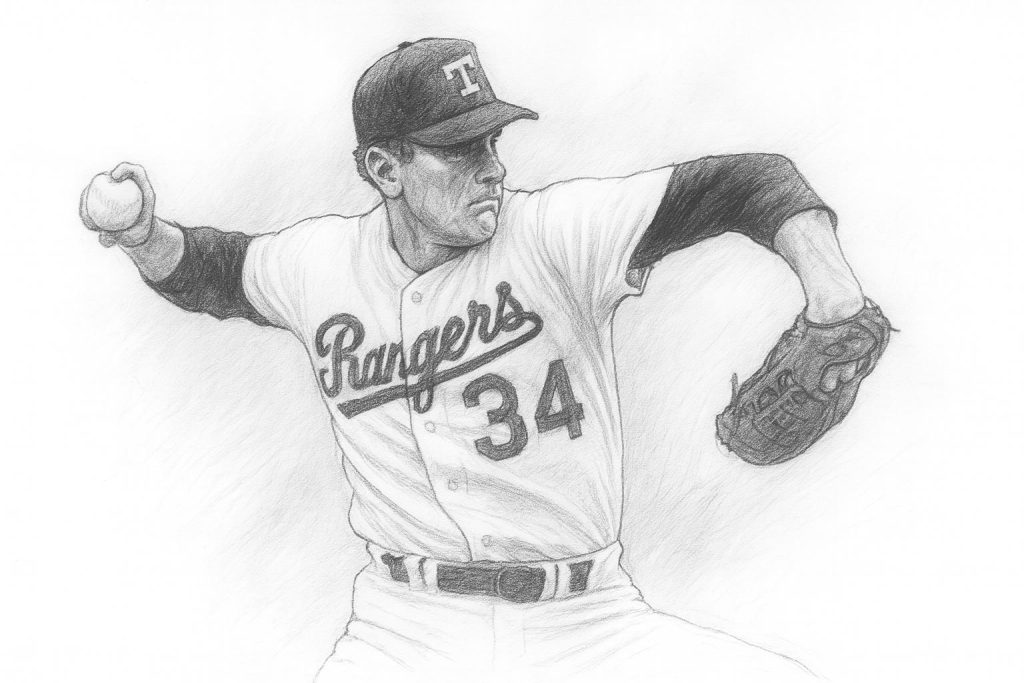
Art Howe
The Interview Transcript
Calm, grounded, and deeply respected within the game, Art Howe offers a thoughtful look back on his experiences with Nolan Ryan — first as an opposing player, later as a fellow Astro. In our conversation, Howe reflected on Ryan’s work ethic, quiet intensity, and the mutual respect that defined their time in the game. I’m deeply grateful to Mr. Howe for taking the time to speak with me and share his memories, adding yet another authentic voice to the story of The K Chronicles.
Interview: July 2025
(Portions of this conversation have been condensed and edited for clarity.)
Dennis: You spent over a decade in the big leagues with three teams. Some of your most impactful years came in Houston. When you look back on your time with the Astros, what moments really stand out—not just the no-hitter, but other memories too?
Art: Well, my first impression of the Astros wasn’t great. I’d played my first two years with the Pirates, and we made the playoffs both seasons. Then I got traded to a last-place team that had lost 97 games the year before. I wasn’t thrilled. But after a few years, I could see we were building a contender.
In ’79, the year before we got Nolan, we had a big lead at the All-Star break. I thought we were finally going to win the division, but we ran out of gas and lost it to Cincinnati at the very end. That winter, we traded for Nolan—and that’s when I knew we were serious. Nolan was the icing on the cake.
Dennis: What was he like around the clubhouse?
Art: Nolan was something else. He worked out religiously between starts—even on nights he pitched. I asked him once, “You’re starting tonight. Why are you doing this?” and he said, “Artie, I just want to get the blood flowing.” His legs were unbelievably strong, but I always joked about how slow he was despite that.
On game day, you didn’t bother him. But the rest of the week, he was the life of the party—joking around, having fun. He fit right in. Him and J.R. Richard—those were the two best pitchers in the league, as far as I was concerned.
Dennis: Ryan’s fastball was legendary. Did the infield prepare differently when he pitched?
Art: It could be tough playing behind him because guys rarely put the ball in play. You had to stay alert. I played third, so with right-handed hitters, I knew there was a chance I might get one.
During that no-hitter, I hadn’t seen a ground ball all game. In the ninth, Dusty Baker came up—he was a pull hitter. I figured Nolan might go to the curve. Sure enough, he did, and Dusty hit it to me. My first thought: get in front of it. If I didn’t field it cleanly, I wanted it to be an error so the no-hitter stayed alive.
Thankfully, I made the play. Denny Walling was at first, and he wasn’t even there yet when I threw it—like a quarterback leading a receiver. He turned just in time and caught it. And that was the final out. The celebration began.
Dennis: That was the last out?
Art: Yes, and I think Nolan later said he was glad the ball was hit to me—that he trusted I’d make the play. That meant a lot to me. My wife was in the stands—I don’t think she wanted the ball hit to me! Everyone was nervous. But what a moment for Nolan. We all knew how much work he put in. Honestly, with all his one-hitters, he could’ve had 10 or 12 no-hitters.
[Section omitted for brevity: Discussion about the book project and card collection.]
Dennis: You later managed the Astros and Athletics. As a player, you were known as steady and dependable. What lessons did you take from playing with Ryan?
Art: As a manager, I probably couldn’t manage today. When I’d go to the mound, I’d look in a pitcher’s eyes. You can see fear, or you can see fight. The eyes don’t lie. Numbers are useful, but they don’t tell you everything. With Nolan, you always knew where he stood. That’s what I learned from guys like him—trust your gut, know your players.
Dennis: What kind of influence did Ryan have off the mound?
Art: When he joined us, we all believed we could win. When he arrived at spring training, everyone went over to shake his hand. He didn’t act like a superstar—just one of us. A prankster, a great teammate. And his work ethic was off the charts.
I still can’t believe he never won a Cy Young. We didn’t score runs for him. He’d even offer $100 to whoever knocked in a run for him. But for some reason, we just couldn’t give him much support.
Dennis: You’ve worn a lot of hats in baseball. Where does playing with Ryan rank in your memories?
Art: I’ve played with, coached, and managed Hall of Famers—Willie Stargell, Joe Morgan, Nolan. They were regular guys with special talent. Great teammates. That’s what I’ll always remember.
Dennis: If you had to describe Nolan in one or two words?
Art: On the mound—“all business.” I used to joke that he’d knock his own mother down. Off the field—fun-loving, a prankster. Just a good ol’ Texas cowboy. And to pitch for 27 years? That’s incredible.
[Interview edit: Closing remarks and logistics removed.]