
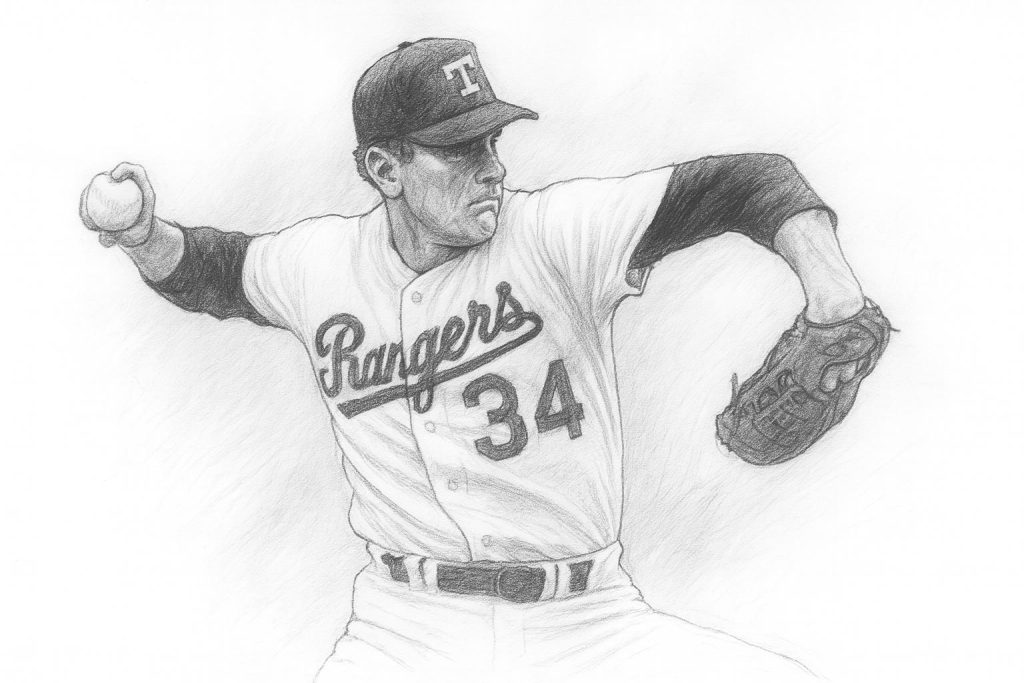
The Ryan–Fregosi Trade
A Tale of Opposites
Baseball remembers the winter of 1971 as a fork in the road — a trade now spoken of with the finality of a verdict. The New York Mets sent away Nolan Ryan and three others for Jim Fregosi, a deal that would become shorthand for miscalculation. But at the time, it did not feel like a blunder. It felt like a repair.
The Mets had holes. Fregosi, they believed, was the answer.
The trade wasn’t one-for-one. It was four for one — Ryan, Don Rose, Leroy Stanton, and a minor-league catcher named Francisco Estrada — all sent to the Angels for a man who, by every visible metric, had earned his reputation. Fregosi was a six-time All-Star, a Gold Glove shortstop, and the first true face of the franchise in Anaheim. For nearly a decade, he had defined the infield and the identity of the Angels — a steady blend of range, poise, and leadership.
In the mid-1960s, there were years when Fregosi stood among the best shortstops in the game. He wasn’t flashy, but he anchored an expansion team still finding its shape. He made the Angels credible before they had a record to match.
But time is a thief. By the close of the 1971 season, Fregosi’s legs had begun to betray him. His range had faded, his bat had slowed, and his injuries lingered like ghosts that refused to leave. The Mets didn’t see the erosion. They saw the résumé. They saw stability, experience, pedigree. They saw what they wanted to see.
And they saw Nolan Ryan as expendable.
Ryan had just finished a maddeningly uneven season — a 10–14 record, a 3.97 ERA, and more walks (116) than anyone wanted to count. His arm was electric, yes. But his delivery was erratic, his control frustrating, his promise dimmed by doubt. At 24, entering his age-25 season, Ryan was still more question than answer. In New York, the fastball came with baggage. The Mets had grown tired of waiting.
So the Angels took the chance.
But it was not Ryan they were trading for. He was part of the return, a hopeful arm among a package of four. He arrived in California with no coronation, no billboard, no demand to transform the franchise. That pressure belonged to Fregosi — now in Queens, now expected to be the cornerstone, the cure, the justification for parting with a young flamethrower who hadn’t yet found himself.
Fregosi stepped into that role with grace. He carried the weight with quiet dignity. But the city demanded results his body could no longer provide. Injuries nagged. The numbers slid. And the expectations — loud, relentless — drowned out the truth: that he was trying. That he had always led with effort, not ego. That the decline was not a failure of will, but of time.
Meanwhile, across the country, the wind shifted.
In Anaheim, Nolan Ryan was handed no script. He was given a jersey and the freedom to fail. He was no longer a disappointment-in-waiting. He was a maybe — a low-pressure, high-upside possibility. And in that space, he breathed. And in that breath, he became.
The transformation was immediate and violent. In 1972, Ryan unleashed a season that changed the vocabulary of pitching. He went 19–16 with a 2.28 ERA, struck out 329 batters — nearly triple his 1971 total — and held opponents to a .171 batting average. The sound of his fastball, once a murmur of frustration, now roared through the California air. It was no longer just velocity. It was prophecy.
The irony was almost too much to hold:
The man given the weight stumbled.
The man freed from it soared.
And yet, they were never enemies. Fregosi and Ryan shared only one plate appearance, years later — a quiet, forgettable walk in an Angels–Rangers game, tucked into the middle innings of a summer night. No showdown. No symbolism. Just a meeting — one man passing through the twilight, the other already ascending toward legend.
Their connection lived not in the box score, but in the ledger — in the exchange that tied them together, in the trade that redefined one career and quietly closed another. History calls it a lopsided deal. But history often forgets the human weight of expectation — the difference between being asked to carry a team and being allowed to become one’s self.
Jim Fregosi was never just the man “traded for Nolan Ryan.” He was a foundational figure, a franchise captain, and later, a respected manager who would guide the 1993 Phillies to the World Series. Even as his legs failed, his baseball mind endured. His presence was a through-line in the sport — a quiet force in dugouts, clubhouses, and front offices for decades.
And Nolan Ryan? He became the myth. But it wasn’t just because he left New York. It was because California handed him space — and in that space, he built a legend no one could contain.
They remain forever linked. One by burden. One by breath.
And in that contrast lives the lesson:
Sometimes, greatness is not about who you are,
But what you’re allowed to become.